Missions
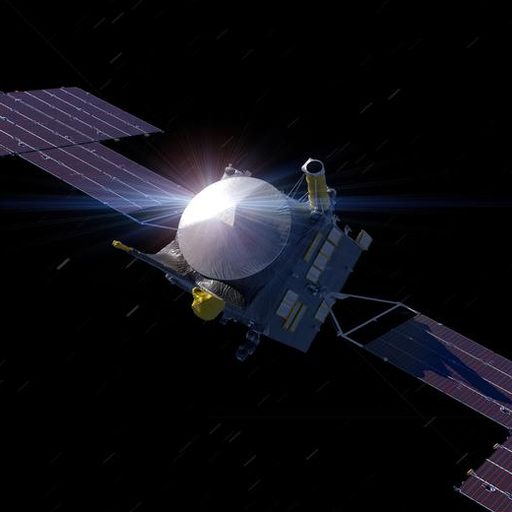
Image: NASA/JPL-Caltech/ASU
Spacecraft explore the solar system in stages: flybys make the first reconnaissance, and orbiters follow with in-depth study.[1] Some missions go further and touch their targets, as when NASA's DART spacecraft struck an asteroid moonlet in 2022 and changed its orbit.[2] And Psyche is the first mission to explore an asteroid whose surface contains substantial amounts of metal rather than rock or ice.[3]
Happening now
Mission update
BepiColombo: Enters orbit around Mercury
ESA / JAXA · Mercury
November 21, 2026
Mission updateEuropa Clipper: Earth gravity assist
NASA · Europa & Jupiter
December 3, 2026
Mission updateBepiColombo: The two orbiters, MPO and Mio, separate
ESA / JAXA · Mercury
December 9–10, 2026
Mission updateHera: Releases the Juventas and Milani CubeSats
ESA · Didymos & Dimorphos
January 2027 (expected)
Notable
DARTNASA's Double Asteroid Redirection Test, which struck the asteroid moonlet Dimorphos in 2022: the first test of asteroid deflection.HeraESA's mission to the Didymos double asteroid, surveying the result of NASA's DART impact so that deflection can be repeated with confidence.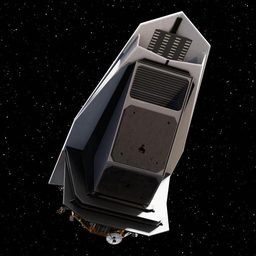 NEO SurveyorNASA's infrared space telescope designed to find asteroids and comets that could be hazardous to Earth, planned for launch no earlier than September 2027.RamsesESA's mission, with Japan's JAXA, to meet the asteroid Apophis before its close pass by Earth on 13 April 2029 and watch how Earth's gravity changes it.OSIRIS-APEXThe NASA spacecraft that returned samples from Bennu, sent on to study Apophis after the asteroid's close pass by Earth in 2029.
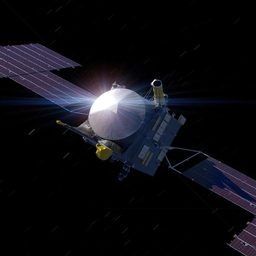 PsycheNASA mission to a metal-rich asteroid of the same name, which may be part of the core of an early planet; arrival is planned for August 2029.
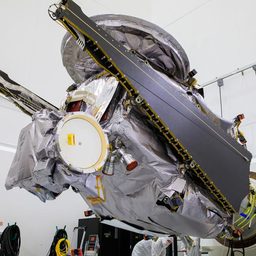 LucyNASA mission flying past a record number of asteroids, including the Trojans that share Jupiter's orbit, from 2023 to 2033.
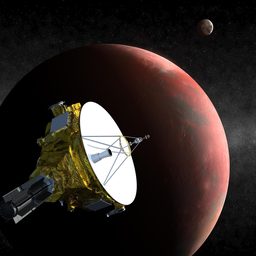 New HorizonsNASA mission that made the first close study of Pluto in 2015 and flew past Arrokoth, the most distant object explored up close, in 2019.
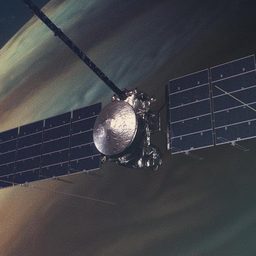 Europa ClipperNASA mission to Jupiter's moon Europa, to find out whether the ocean beneath its ice could support life; arrival at Jupiter is planned for April 2030.
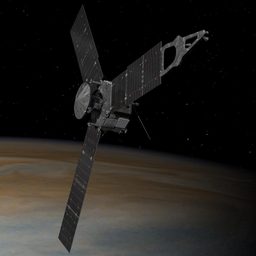 JunoNASA's Jupiter orbiter, in orbit since July 2016, studying the planet's interior, atmosphere and magnetic field, and later its large moons.DragonflyNASA rotorcraft mission to Saturn's moon Titan, to fly between sites and study the chemistry that came before life; launch no earlier than July 2028.ESCAPADENASA's twin spacecraft to study how the solar wind strips away Mars' atmosphere; launched in November 2025, with arrival at Mars planned for September 2027.DAVINCINASA mission to Venus with a spacecraft and a probe, to learn whether Venus was once wet and habitable like Earth.VERITASNASA Venus orbiter to map the planet's surface through its clouds and learn how Venus and Earth came to differ.Hayabusa2JAXA mission that returned samples from the asteroid Ryugu in 2020, then flew past Torifune in 2026; its extended mission targets 1998 KY26 in 2031.Tianwen-2China's mission to collect a sample from the small near-Earth asteroid Kamo'oalewa and then explore a comet in the main asteroid belt.DESTINY+JAXA mission to fly past Phaethon, the asteroid behind the Geminid meteor shower, and study the dust it sheds; launch is planned for Japan's fiscal year 2028.Comet InterceptorESA mission, with JAXA, that will wait in space for a pristine comet, or an interstellar object, and fly past it with three spacecraft at once.MBR ExplorerThe UAE's mission to the main asteroid belt, planned to fly past six asteroids and then land on the asteroid Justitia; launch is scheduled for March 2028.MMXJAXA's Martian Moons eXploration, launched in October 2026 to land on Phobos, deploy a rover and bring a sample of the Martian moon back to Earth in 2031.BepiColomboESA and JAXA mission to Mercury, launched in October 2018, that splits into two orbiters to study the planet together; science is to begin in April 2027.JuiceESA's Jupiter Icy Moons Explorer, launched in April 2023, to study Jupiter and its ocean moons and to become the first spacecraft to orbit Ganymede.EnVisionESA mission, with NASA, to study Venus from its core to its upper atmosphere and learn why it became so unlike Earth; launch is planned for November 2031.Venus Orbiter MissionIndia's first mission to Venus, planned for launch in March 2028, to study the planet's atmosphere, surface and interaction with the Sun.Rosalind FranklinESA's Mars rover, built to drill up to 2 m below the surface in search of signs of past or present life; launch is targeted for 2028 and landing for 2030.Tianwen-3China's Mars sample return mission, planned for launch around 2028 on two rockets, to bring samples from the Martian surface to Earth around 2031.Chang'e-7China's mission to the Moon's south pole, with an orbiter, a lander and a craft built to fly into shadowed craters, to search for water ice.
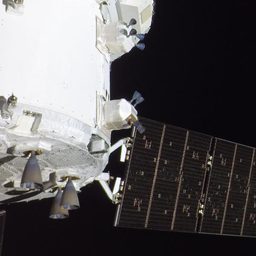 Artemis IIThe first crewed Artemis flight, which carried four astronauts around the Moon and back in April 2026.Artemis IIIA crewed NASA mission in Earth orbit, planned for 2027, to test docking with the commercial landers that are to take astronauts to the Moon.Artemis IVNASA's first crewed Moon landing of the Artemis program, planned for 2028.NEAR ShoemakerNASA's Near Earth Asteroid Rendezvous, the first spacecraft to orbit an asteroid and the first to land on one: a year at Eros, 2000 to 2001.HayabusaJAXA's Hayabusa, the first mission to bring back a piece of an asteroid: dust from Itokawa, collected in 2005 and returned to Earth in 2010.DawnNASA's Dawn, the first spacecraft to orbit two destinations beyond Earth: the asteroid Vesta in 2011 and 2012, then the dwarf planet Ceres from 2015 to 2018.
NEO SurveyorNASA's infrared space telescope designed to find asteroids and comets that could be hazardous to Earth, planned for launch no earlier than September 2027.RamsesESA's mission, with Japan's JAXA, to meet the asteroid Apophis before its close pass by Earth on 13 April 2029 and watch how Earth's gravity changes it.OSIRIS-APEXThe NASA spacecraft that returned samples from Bennu, sent on to study Apophis after the asteroid's close pass by Earth in 2029.PsycheNASA mission to a metal-rich asteroid of the same name, which may be part of the core of an early planet; arrival is planned for August 2029.LucyNASA mission flying past a record number of asteroids, including the Trojans that share Jupiter's orbit, from 2023 to 2033.New HorizonsNASA mission that made the first close study of Pluto in 2015 and flew past Arrokoth, the most distant object explored up close, in 2019.Europa ClipperNASA mission to Jupiter's moon Europa, to find out whether the ocean beneath its ice could support life; arrival at Jupiter is planned for April 2030.JunoNASA's Jupiter orbiter, in orbit since July 2016, studying the planet's interior, atmosphere and magnetic field, and later its large moons.DragonflyNASA rotorcraft mission to Saturn's moon Titan, to fly between sites and study the chemistry that came before life; launch no earlier than July 2028.ESCAPADENASA's twin spacecraft to study how the solar wind strips away Mars' atmosphere; launched in November 2025, with arrival at Mars planned for September 2027.DAVINCINASA mission to Venus with a spacecraft and a probe, to learn whether Venus was once wet and habitable like Earth.VERITASNASA Venus orbiter to map the planet's surface through its clouds and learn how Venus and Earth came to differ.Hayabusa2JAXA mission that returned samples from the asteroid Ryugu in 2020, then flew past Torifune in 2026; its extended mission targets 1998 KY26 in 2031.Tianwen-2China's mission to collect a sample from the small near-Earth asteroid Kamo'oalewa and then explore a comet in the main asteroid belt.DESTINY+JAXA mission to fly past Phaethon, the asteroid behind the Geminid meteor shower, and study the dust it sheds; launch is planned for Japan's fiscal year 2028.Comet InterceptorESA mission, with JAXA, that will wait in space for a pristine comet, or an interstellar object, and fly past it with three spacecraft at once.MBR ExplorerThe UAE's mission to the main asteroid belt, planned to fly past six asteroids and then land on the asteroid Justitia; launch is scheduled for March 2028.MMXJAXA's Martian Moons eXploration, launched in October 2026 to land on Phobos, deploy a rover and bring a sample of the Martian moon back to Earth in 2031.BepiColomboESA and JAXA mission to Mercury, launched in October 2018, that splits into two orbiters to study the planet together; science is to begin in April 2027.JuiceESA's Jupiter Icy Moons Explorer, launched in April 2023, to study Jupiter and its ocean moons and to become the first spacecraft to orbit Ganymede.EnVisionESA mission, with NASA, to study Venus from its core to its upper atmosphere and learn why it became so unlike Earth; launch is planned for November 2031.Venus Orbiter MissionIndia's first mission to Venus, planned for launch in March 2028, to study the planet's atmosphere, surface and interaction with the Sun.Rosalind FranklinESA's Mars rover, built to drill up to 2 m below the surface in search of signs of past or present life; launch is targeted for 2028 and landing for 2030.Tianwen-3China's Mars sample return mission, planned for launch around 2028 on two rockets, to bring samples from the Martian surface to Earth around 2031.Chang'e-7China's mission to the Moon's south pole, with an orbiter, a lander and a craft built to fly into shadowed craters, to search for water ice.Artemis IIThe first crewed Artemis flight, which carried four astronauts around the Moon and back in April 2026.Artemis IIIA crewed NASA mission in Earth orbit, planned for 2027, to test docking with the commercial landers that are to take astronauts to the Moon.Artemis IVNASA's first crewed Moon landing of the Artemis program, planned for 2028.NEAR ShoemakerNASA's Near Earth Asteroid Rendezvous, the first spacecraft to orbit an asteroid and the first to land on one: a year at Eros, 2000 to 2001.HayabusaJAXA's Hayabusa, the first mission to bring back a piece of an asteroid: dust from Itokawa, collected in 2005 and returned to Earth in 2010.DawnNASA's Dawn, the first spacecraft to orbit two destinations beyond Earth: the asteroid Vesta in 2011 and 2012, then the dwarf planet Ceres from 2015 to 2018.Guides
Terms
All terms in the GlossarySources
- [1]NASA, Basics of Space Flight, Chapter 9: Spacecraft Classification — science.nasa.gov, retrieved October 26, 2026
- [2]NASA, NASA Confirms DART Mission Impact Changed Asteroid's Motion in Space — nasa.gov, retrieved October 26, 2026
- [3]NASA, Psyche — science.nasa.gov, retrieved October 26, 2026