Moon, planets & eclipses
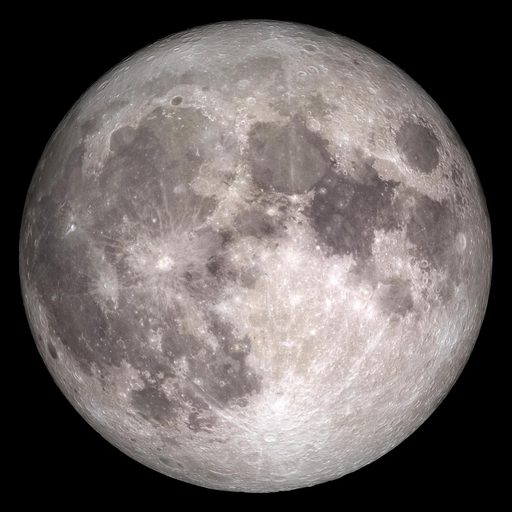
The Moon's phases repeat every 29.5 days and set how dark the night sky is.[1] Five planets, Mercury, Venus, Mars, Jupiter and Saturn, are easy to see without a telescope, and on most nights at least one is up.[2] When the Sun, the Moon and Earth line up, there is an eclipse: a solar eclipse at new Moon, a lunar eclipse at full Moon.[3]
Happening now
Conjunction
Mars near Jupiter
1.2° apart · before dawn
November 15, 2026 (UTC)
PlanetsMercury at greatest elongation
Morning sky · 20° from the Sun
November 20, 2026
ConjunctionMoon near Jupiter
1.9° apart · before dawn · Moon 67% lit
November 30, 2026 (UTC)
ConjunctionMoon near Jupiter
3.3° apart · before dawn · Moon 87% lit
December 27, 2026 (UTC)
Notable
Total solar eclipseAugust 12, 2026 (UTC)Partial lunar eclipseAugust 28, 2026 (UTC)Annular solar eclipseFebruary 6, 2027 (UTC)Total solar eclipseAugust 2, 2027 (UTC)Partial lunar eclipseJanuary 12, 2028 (UTC)Annular solar eclipseJanuary 26, 2028 (UTC)Partial lunar eclipseJuly 6, 2028 (UTC)Total solar eclipseJuly 22, 2028 (UTC)Total lunar eclipseDecember 31, 2028 (UTC)Partial solar eclipseJanuary 14, 2029 (UTC)Partial solar eclipseJune 12, 2029 (UTC)Total lunar eclipseJune 26, 2029 (UTC)Partial solar eclipseJuly 11, 2029 (UTC)Partial solar eclipseDecember 5, 2029 (UTC)Total lunar eclipseDecember 20, 2029 (UTC)Annular solar eclipseJune 1, 2030 (UTC)Partial lunar eclipseJune 15, 2030 (UTC)
Guides
- EclipsesHow solar and lunar eclipses happen, how total, annular and partial eclipses differ, where they can be seen, and how to watch a solar eclipse safely.
- The MoonWhy the Moon goes through phases, when each phase is in the sky, and why moonlight matters for seeing meteors, comets and the aurora.
- Planets in the night skyWhich planets you can see without a telescope, how to tell them from stars, and what opposition, conjunction and elongation mean for when to look.
Terms
All terms in the GlossarySources
- [1]NASA, Moon Phases — science.nasa.gov, retrieved October 26, 2026
- [2]NASA, Skywatching — science.nasa.gov, retrieved October 26, 2026
- [3]NASA, Eclipses — science.nasa.gov, retrieved October 26, 2026